


As coral reefs are bleaching seven times faster than their natural recovery rate and Miami Beach engineers work on sand replenishment projects, swimwear has gone from being a symbol of recreation to a critical interface between the human body and growing climate threats. WGSN’s Geo-Logic forecast points to an urgent shift: by 2026/27, swimwear will serve as a wearable ecosystem, blending material innovation (62% bio-based options), color intelligence (40% visibility increase), and structural adaptability (day-night functionality) to reconcile recreation and planetary survival. This shift is based on solid statistics—a 61% increase in off-season tropical travel, a 33% increase in melanoma rates in coastal areas—that are creating a new category of climate-tech apparel where every stitch embodies ecological resilience.
Table of Contents
Silent Catalyst: Climate Pressure Is Rewriting the Product Calendar
Physical Alchemy: From Petrochemical Dependence to Biosphere Harmony
The New Humility: Sun Shield as a Status Symbol
Colorful Intelligence: When Color Becomes a Means of Survival
Conclusion: Wearable Ecosystems for the Human Age
Silent catalyst: climate pressure is rewriting the product calendar
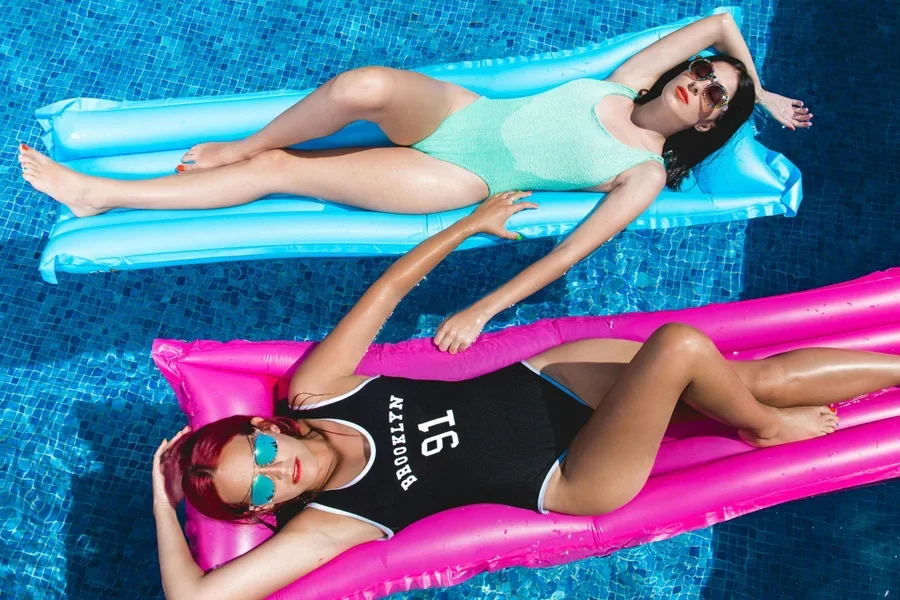
The collapse of seasonal predictability has collapsed swimwear's traditional design cycle. Where designers previously focused solely on summer collections, resort destinations are now reporting a surge in customer numbers even during historically inactive months. Statistics from Bali's Ngurah Rai Airport show that arrivals in November 2023 were 22% higher than the July peak, directly driven by travelers coming to escape extreme weather elsewhere. This shift has led to a fundamentally redesigned philosophy: swimwear must now work equally well in Morocco's winter sun and Norway's midnight sun.
Brands like Colombian brand Maji respond with modular systems rather than standalone products. Their “Swimmer” collection includes convertible rash guards with zip-off sleeves that transform into ski gaiters, while reversible wrap skirts feature UPF 50+ lining. Importantly, these designs address the 78% increase in Airbnb listings advertising “year-round heated pools” in cold climates like Reykjavik. As heat waves push beach activities into the nighttime hours, Speedo’s new Solar Flare line features retroreflective piping that captures moonlight. During the record-breaking 2024 heatwave in Miami, lifeguards reported that these glowing suits increased swimmers’ visibility by up to 300 meters – turning a lifesaving necessity into an aesthetic innovation

